.jpg)

Monday, April 29, 2013

Wednesday, April 17, 2013
Travel Tips for the Elderly

No matter what your age is, traveling takes preparation and work, but it always seems to be worth it when you reach the final destination. Seniors may need to put in extra exertion when they travel since age sometimes results in a wider range of needs. This effort can be easier if you follow our travel tips for the elderly below:
1. Plan, Reserve, Confirm
• Seek the shortest travel times and look for direct flights
• Try to use airlines that have senior discounts, such as Southwest and Amtrak
• Request any special services for the elderly that are available ahead of time by contacting the airline
• Choose a seat assignment in rows designation for disabled travelers or the exit row because it has more leg room
• Book wheelchair service at every airport (usually free) or bring your transport chair with you and make a plan for getting it on and off the plane
• Purchase travel insurance with pre-existing illness cover
• Prepare documents and make sure you have everything you need for the trip
• Print tickets and make copies of all important documents (passport, tickets, drivers license, insurance and more)
• Confirm your flight times and that you have transportation to and from the airport
2. Pack Practically
• Pack light, but include items for every weather scenario
• Utilize a rolling suitcase to keep from straining your back
• Put all of your prescriptions in one place, preferably a pillbox with compartments for different days of the week and include notes
• Make sure your carry-on bag has everything you need during the duration of the flight, including eyeglasses, a neck pillow and entertainment
3. Act Safely
• Stay focused in airports and crowded places
• Keep your eye on your bags
• Ask for help when you need, don’t be afraid to ask flight attendant to assist you with carry-ons and escort you onto and off of the plane
• Use a rollator or walker to guide you and help you after a long day on your feet
Friday, April 12, 2013
Top 5 Moments in Baseball History

This article has moved!!
Visit https://www.mmarmedical.com/Top-5-Moments-in-Baseball-History-s/1437.htmWednesday, March 27, 2013
3 Common Injuries at the Ball of the Foot

Here, we describe three common sources of ball-of-foot pain which may require some form of treatment.
Metatarsalgia – Metatarsalgia is the given name for the nondescript, potentially throbbing pain sometimes felt in the ball of the foot. It may also sometimes be called a stone bruise (due to the potential for it emerging following blunt trauma to the region by stepping on a small sharp rock). It is the functional equivalent of a toothache in the ball, and comes as a result of undue stress or trauma placed on one or more metatarsals. With metatarsalgia, the ball is typically very tender to the touch, making it difficult to walk, and it is sometimes accompanied by swelling. The condition typically arises as a result of a combination of natural propensity for the injury (from structural problems in the foot) and overuse, such as by extended running, walking, or standing. Resting and icing the injured area can help speed the recovery process and give your ball of foot relief.
Morton’s Neuroma – A neuroma is a tumorous growth of nerve tissue, but in this case, it is a misnomer. In actuality, Morton’s neuroma is typically a buildup of fibrous tissue surrounding a nerve running along the metatarsals, rather than growth of the nerve itself. Morton’s neuroma is benign, but it may result in pain or numbness in the ball of the foot, especially when ill-fitting or old shoes are worn. It typically occurs due to the rubbing of metatarsal bones against the nerve, which may be made more severe by shoes that are too tight or awkwardly fitting. Shoes specially designed for orthotic comfort may reduce the pressure placed on the nerve and provide a much-needed comfort to ball of foot pain.
Sesamoiditis – This is an injury to the bones directly behind the large toe, called sesamoid bones. It typically results in pain and swelling to the inner ball of the foot (so the right side of the ball on the left foot, and vice versa on the right). It may occur due to excessive bending of the large toe in an unusual direction, or by shoes that put a lot of stress on that particular area of the foot (especially high heeled shoes). Reducing stress on the foot by using orthotic insoles may help in reducing pain during recovery.
Thursday, March 21, 2013
Top 5 Benefits of Compression Sleeves

This article has moved!
Visit https://www.mmarmedical.com/Top-5-Benefits-of-Compression-Sleeves-s/1447.htm
Friday, March 1, 2013


Tuesday, December 18, 2012
How to Treat Arthritis with a Cold Therapy System
A
cold therapy system is an effective treatment option for those who suffer from
arthritis. Cold therapy relieves your symptoms and helps you slow the
progression of your arthritis.
Understanding
Arthritis
Arthritis
is something that most people deal with eventually. There are over 100
different types of the condition. A diagnosis of arthritis simply means that
something is wrong with at least one of your joints. Knowing how our joints
work is the first step in understanding arthritis.
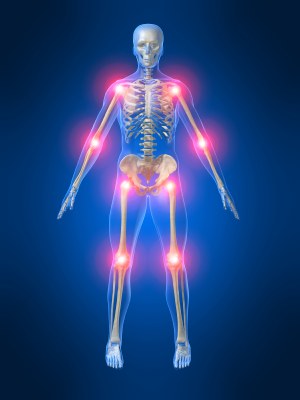 Inside
our joints, ligaments hold the bones together. These stretch like elastic when
we move our joints. Bones are padded with cartilage so that they do not rub
directly against each other. This is what allows for smooth and painless
mobility. Also, each of our joints is surrounded by a capsule called the
synovial membrane, and is filled with synovial fluid. This liquid provides
nourishment to the joint as a whole – especially to the cartilage.
Arthritis
is characterized by pain, swelling, stiffness, redness and warmth. There are
two common types:
•
Rheumatoid arthritis
•
Osteoarthritis
Rheumatoid
arthritis is a form of joint inflammation. For unknown reasons, the synovial
membrane is attacked by the body’s own immune system. Unlike Osteoarthritis, it
usually affects both sides of the body. For example, it occurs in both hands or
in both knees.
Osteoarthritis
is a stiffening of the cartilage. Stiff cartilage means fragile cartilage. Not
only does the cartilage smooth the joint movement, but it is also a shock
absorber. Stiffened cartilage will suffer from wear and tear much more quickly
than healthy cartilage. As cartilage wears away, the ligaments become
over-stretched resulting in pain. Given enough time and cartilage loss, the
bones will actually rub against each other. This bone-on-bone friction causes
very severe pain.
What
are Cold Therapy Systems?
The
purpose of a cold
therapy system is to cool isolated body parts for extended periods.
Cooling
methods include:
•
Automated flow of ice water through a cuff or other wearable device
•
Clothing, gloves or braces designed to accommodate ice packs
•
an electrical cooling element inside a device designed to fit specific body
parts
How
do Cold Therapy Systems Help with Arthritis?
Cold applications
reduce swelling and inflammation by constricting blood vessels. Slowing blood
flow to the area, cold therapy reduces the buildup of fluids. It will also
stimulate the release of endorphins, which lower the number of pain signals
that are sent to the brain. This combined effect will numb even deep arthritic
discomfort. Cold therapy systems are especially helpful when pain flares up
after activity.
Unfortunately,
arthritis causes many people to avoid physical activity. Limited activity leads
to many health problems, but it also makes arthritis worse. Weight gain and the
loss of strength cause joints to hurt even more. To keep your joints flexible,
you have to keep them moving.
The
use of a cold therapy system relieves the pain. This also allows you to go
about your business without dedicating a hand to keep your compress on. Most
importantly, it allows you to be active. You will be able to exercise the
affected joint throughout your daily routine. Cold therapy systems make
exercise a possibility for people who would be in too much pain otherwise.
Exercise helps bone and cartilage health. Strengthened muscles take pressure off
your joints. All these benefits of exercise greatly reduce the progressive
nature of arthritis.
Prescriptions
are not required cold therapy systems, but it is a good idea to speak with your
doctor before using any cold compress for more than 20 minutes at a time.
Some
patients find that combining heat therapy with a cold therapy system provides
extra relief, though this is not the case for everyone. Some people get more
arthritis relief from cold therapy systems alone.
There
is no cure for arthritis, but we can slow its progression. Remember, the most
important thing is to stay mobile. Practice range of motion stretches and get
exercise. If arthritic pain has kept you from these activities, a cold therapy
system can make them possible again.
Tuesday, November 27, 2012
TLSO – The Boston Brace – Spinal Support That Heals

Treatments to correct injuries and disorders of the spine can vary widely, but in many instances a back brace is an effective method for allowing patients to minimize pain, correct irregularities, speed recovery and/or regain an active lifestyle.
TLSO Braces are prescribed to patients of all ages with spinal irregularities ranging in a wide degree of severity. TLSO stands for Thoraco-Lumbo-Sacral-Orthosis and this type of brace is often referred to as a “Boston Brace.”
Children with scoliosis are most often prescribed a TLSO brace. These braces provide back support and limit the progression of a spinal curvature as the individual grows. The Boston Brace is the most common back brace in use for scoliosis treatment. It corrects curvatures with small pads that are fitted against the ribs. The body is held upright and experiences pressure towards the front of the brace body. It extends from the hip to the tip of the shoulder blade. Most patients wear the brace for 20 to 23 hours each day. It can be removed to participate in physical activities, however. The Boston Brace is most effective in treating curves in the lumbar and thoraco-lumbar area of the spine.
Back braces can come in two different forms – soft and rigid. The Boston Brace is a rigid brace, often comprised of molded plastic which is specifically fitted to the patient.
In addition to scoliosis, the TLSO or Boston Brace is commonly used to help patients that have experienced a fracture or undergone fusion operations. A TLSO minimizes discomfort for the patient and actually assist in the healing process.
There are also back braces that feature slight variations of the standard TLSO Brace. The Cervico-Thoraco-Lumbo-Sacral-Orthosis Brace is one example. This brace is similar to the Boston Brace in the method of support it utilizes. However, it incorporates bars which extend from the body towards the head. Attached to these bars is a ring designed to support the patient's neck. This brace is still considered a form of the TLSO Brace. Some patients benefit from wearing braces throughout the night. To minimize discomfort and encourage a good night of sleep, patients are often prescribed a Charleston Bending Brace. This brace is molded specifically to the body of the patient as well.
Choosing the right type of brace depends heavily upon the condition and specific support needed. Physicians are an invaluable resource for guiding patients in their choice of equipment. Most back braces can be outfitted with additional accessories to provide more stability in certain areas of the spine. These accessories include items such as lateral shoulder supports. A variety of plastics and technological advances have also allowed for the development of braces that are less visible, more supportive and can easily be worn under clothing.
Tuesday, November 13, 2012
Clavicle/Collarbone Injuries in Sports

A broken collarbone, or clavicle fracture, is one of the most common injuries that athletes face when competing in contact and even non-contact sports.
What is the clavicle? The clavicle is a long bone that runs between the scapula, or shoulder blade, and the sternum.
What causes clavicle fractures? A common cause of clavicle fracture is the stress that the collarbone suffers when a person stretches out his or her arm to break a fall; in this case, most of the weight of one's body is distributed to the collarbone, which can then snap under the pressure. Additionally, a fall directly to the shoulder area, or any direct blow to that region can cause a serious collarbone injury to an athlete.
Symptoms of clavicle fracture can include pain at the site of fracture, restricted arm motion, and discolored skin around the affected area. For serious collarbone injuries, you might be able to see the fracture because of the bone misalignment. A doctor will perform an X-ray to determine the severity and properly diagnose a clavicle fracture.
Who is likely to incur this type of injury? Athletes at all levels of competition, from football and cycling to equestrian and skateboarding. Clavicle fractures have been suffered by the likes of NFL quarterbacks Matt Leinart and Tony Romo and put out wide receiver Danny Amendola just this past NFL season.
How to avoid a collarbone injury? Though clavicle fractures, like any other types of bone fractures, are unavoidable in certain cases, there are steps that can be taken to lessen their likelihood and minimize the potential for risk.
- Ensure you intake the recommend amounts of Calcium and Vitamin D, nutrients that bolster bone integrity. Lacking these essential dietary components can put you at higher risk of clavicle fracture and could require longer recovery time.
- Develop the protective muscle tissue around the clavicle. Because the clavicle is supported by stabilizing muscles, those who do not get enough exercise to develop this protective muscle tissue may also have a higher change of clavicle fracture.
- Wear proper padding and protection during practice and competition.
What is treatment like? Treatment is relatively simple and usually does not require surgery. Additionally, recovery time is not terribly long - typically, healing will occur in about 2 - 4 weeks for children and 4 - 8 weeks for adults. For most sufferers of clavicle fractures, a cervical sling, splint, cervical brace or other type of support needs to be worn throughout the recovery process in order to restrict the fractured bone from moving.
MMAR Medical offers several different types of collar braces, including a hook-and-loop style that is buckled around the wearer's back, a front-closure splint that contains padding in the clavicle area, and a figure-eight splint with a prong buckle front closure. With the proper use of a brace, those who have suffered clavicle fractures can usually avoid surgery for their condition so long as the affected area is adequately protected and does not suffer any additional trauma.
Subscribe to:
Posts (Atom)