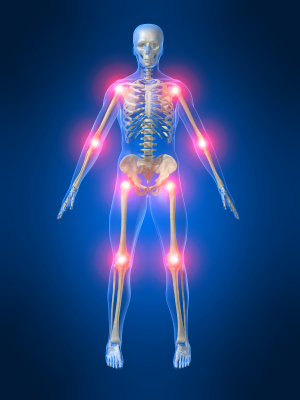
Inside
our joints, ligaments hold the bones together. These stretch like elastic when
we move our joints. Bones are padded with cartilage so that they do not rub
directly against each other. This is what allows for smooth and painless
mobility. Also, each of our joints is surrounded by a capsule called the
synovial membrane, and is filled with synovial fluid. This liquid provides
nourishment to the joint as a whole – especially to the cartilage. Tuesday, December 18, 2012
How to Treat Arthritis with a Cold Therapy System
Inside
our joints, ligaments hold the bones together. These stretch like elastic when
we move our joints. Bones are padded with cartilage so that they do not rub
directly against each other. This is what allows for smooth and painless
mobility. Also, each of our joints is surrounded by a capsule called the
synovial membrane, and is filled with synovial fluid. This liquid provides
nourishment to the joint as a whole – especially to the cartilage. Tuesday, November 27, 2012
TLSO – The Boston Brace – Spinal Support That Heals
Treatments to correct injuries and disorders of the spine can vary widely, but in many instances a back brace is an effective method for allowing patients to minimize pain, correct irregularities, speed recovery and/or regain an active lifestyle.
TLSO Braces are prescribed to patients of all ages with spinal irregularities ranging in a wide degree of severity. TLSO stands for Thoraco-Lumbo-Sacral-Orthosis and this type of brace is often referred to as a “Boston Brace.”
Children with scoliosis are most often prescribed a TLSO brace. These braces provide back support and limit the progression of a spinal curvature as the individual grows. The Boston Brace is the most common back brace in use for scoliosis treatment. It corrects curvatures with small pads that are fitted against the ribs. The body is held upright and experiences pressure towards the front of the brace body. It extends from the hip to the tip of the shoulder blade. Most patients wear the brace for 20 to 23 hours each day. It can be removed to participate in physical activities, however. The Boston Brace is most effective in treating curves in the lumbar and thoraco-lumbar area of the spine.
Back braces can come in two different forms – soft and rigid. The Boston Brace is a rigid brace, often comprised of molded plastic which is specifically fitted to the patient.
In addition to scoliosis, the TLSO or Boston Brace is commonly used to help patients that have experienced a fracture or undergone fusion operations. A TLSO minimizes discomfort for the patient and actually assist in the healing process.
There are also back braces that feature slight variations of the standard TLSO Brace. The Cervico-Thoraco-Lumbo-Sacral-Orthosis Brace is one example. This brace is similar to the Boston Brace in the method of support it utilizes. However, it incorporates bars which extend from the body towards the head. Attached to these bars is a ring designed to support the patient's neck. This brace is still considered a form of the TLSO Brace. Some patients benefit from wearing braces throughout the night. To minimize discomfort and encourage a good night of sleep, patients are often prescribed a Charleston Bending Brace. This brace is molded specifically to the body of the patient as well.
Choosing the right type of brace depends heavily upon the condition and specific support needed. Physicians are an invaluable resource for guiding patients in their choice of equipment. Most back braces can be outfitted with additional accessories to provide more stability in certain areas of the spine. These accessories include items such as lateral shoulder supports. A variety of plastics and technological advances have also allowed for the development of braces that are less visible, more supportive and can easily be worn under clothing.
Tuesday, November 13, 2012
Clavicle/Collarbone Injuries in Sports
A broken collarbone, or clavicle fracture, is one of the most common injuries that athletes face when competing in contact and even non-contact sports.
What is the clavicle? The clavicle is a long bone that runs between the scapula, or shoulder blade, and the sternum.
What causes clavicle fractures? A common cause of clavicle fracture is the stress that the collarbone suffers when a person stretches out his or her arm to break a fall; in this case, most of the weight of one's body is distributed to the collarbone, which can then snap under the pressure. Additionally, a fall directly to the shoulder area, or any direct blow to that region can cause a serious collarbone injury to an athlete.
Symptoms of clavicle fracture can include pain at the site of fracture, restricted arm motion, and discolored skin around the affected area. For serious collarbone injuries, you might be able to see the fracture because of the bone misalignment. A doctor will perform an X-ray to determine the severity and properly diagnose a clavicle fracture.
Who is likely to incur this type of injury? Athletes at all levels of competition, from football and cycling to equestrian and skateboarding. Clavicle fractures have been suffered by the likes of NFL quarterbacks Matt Leinart and Tony Romo and put out wide receiver Danny Amendola just this past NFL season.
How to avoid a collarbone injury? Though clavicle fractures, like any other types of bone fractures, are unavoidable in certain cases, there are steps that can be taken to lessen their likelihood and minimize the potential for risk.
- Ensure you intake the recommend amounts of Calcium and Vitamin D, nutrients that bolster bone integrity. Lacking these essential dietary components can put you at higher risk of clavicle fracture and could require longer recovery time.
- Develop the protective muscle tissue around the clavicle. Because the clavicle is supported by stabilizing muscles, those who do not get enough exercise to develop this protective muscle tissue may also have a higher change of clavicle fracture.
- Wear proper padding and protection during practice and competition.
What is treatment like? Treatment is relatively simple and usually does not require surgery. Additionally, recovery time is not terribly long - typically, healing will occur in about 2 - 4 weeks for children and 4 - 8 weeks for adults. For most sufferers of clavicle fractures, a cervical sling, splint, cervical brace or other type of support needs to be worn throughout the recovery process in order to restrict the fractured bone from moving.
MMAR Medical offers several different types of collar braces, including a hook-and-loop style that is buckled around the wearer's back, a front-closure splint that contains padding in the clavicle area, and a figure-eight splint with a prong buckle front closure. With the proper use of a brace, those who have suffered clavicle fractures can usually avoid surgery for their condition so long as the affected area is adequately protected and does not suffer any additional trauma.
Friday, November 2, 2012
Annular Tear Causes, Symptoms and Treatment
What Is an Annual Tear?
An annular tear is a tear in somewhere in the annulus fibrosus. This is a ligament that makes up the capsule of the disc that’s found between the vertebrae. These discs act as cushions between the vertebrae, which are bony, and allow the spine to move and to absorb shocks. The discs are made up not only of the annulus fibrosus, but the nucleus polposus, which is inside the disc. The inner annulus and the nucleus have no nerves and so can’t feel pain, but the outside of the annulus does have nerves and the person may feel pain if it’s injured. However, sometimes an annular tear doesn't produce pain.
Symptoms
If the annular tear produces pain, it will be because the substance in the nucleus polposus has leaked out and come into contact with the nerves. This causes the body to react through an inflammatory response. The disc might also have ruptured or might be bulging between the vertebrae. This will cause a sharp pain in the back, and numbness, tingling and weakness felt in a leg or the legs. Any sudden movement, including sneezing or coughing, can make the pain worse. The pain is eased when the person stands up and is still.
Causes
Annular tears can be caused by the normal wear and tear of aging. The tear can begin as a small hole that doesn’t cause problems, but it may enlarge. If it enlarges, the gel-like substance of the nucleus can begin to leak out. Sports, especially contact sports like football, can also lead to annular tears. Annular tears can also be caused by very strenuous exercise, especially that which requires lifting heavy objects or bending. Being overweight and obese can put stress on the spine and lead to an annual tear as well.
Diagnosis
The tear can be diagnosed by a doctor using an X ray or a CT scan. The doctor can also inject a dye into the nucleus, which will show the extent of the damage. An annular tear can be rated from zero, which means that the disc is normal, to 6, which means that the tear is large enough for the nucleus to leak.
Treatment
Sometimes an annular tear will heal spontaneously, and create scar tissue that, to an extent, keeps the nucleus from leaking. Sometimes the patient can apply a cold therapy pad or compress to the area. These can be applied several times a day in 15 minute sessions. After that, replace cold with a thermal wrap or compresses can be applied to the injured area. The patient can also take NSAIDs like ibuprofen to ease the pain. Unlike a lot of back problems, an annular tear isn’t helped much by resting in bed. Long periods of time in bed can only weaken the back muscles.
A physiotherapist might recommend exercises, massages and hydrotherapy. Though surgery is usually not needed for this type of an injury, surgery can be undertaken if nothing else works. During recovery, the patient will be fitted with a lower back brace or a soft lumbar support. Most patients do recover from annular tears and can make lifestyle changes, like taking up exercise and losing weight, to prevent them from happening in the future.
To learn more about annular tears, visit the MMAR Medical Annulus tear or sprain article in our injury library.
Tuesday, October 30, 2012
Swede-O Thermoskin Open Wrap Knee Brace Review
To treat knee complications such as a ligament injuries or arthritic pain, the Swede-O Thermoskin Open Wrap Knee Brace can provide significant relief through a combination of compression, stabilization and heat therapy. As a rehabilitation brace, the Swede-O helps to stabilize the knee, alleviating pain and facilitating proper alignment for easier and more comfortable walking. It can also relieve pressure that arises from ailments such as strain injuries, arthritis, and other knee problems. The Thermoskin Open Wrap Knee Brace is an ideal product to maintain a strong and stable knee for smooth, pain-free function in the activities of everyday life.
As the only authorized supplier of Thermoskin products, Swede-O is a leader in the field of heat therapy. The Open Wrap Knee Brace by Swede-O contains Thermoskin Thermal Supports that increase the temperature of the knee beneath the skin. Only Thermoskin products have demonstrated the ability to raise the knee temperature by 2 to 3 degrees, which results in a maximal benefit of heat therapy. Indeed, a temperature of approximately one or two degrees above the normal body temperature is the optimal heat level for superior muscular function. Also, the Trixion lining of the Thermoskin supports is a patented technology that sustains the heat within the knee while simultaneously ventilating the area to hinder perspiration. As a consequence of the ventilating abilities of Trixion lining, the Swede-O knee brace keeps moisture away from the knee and allows for pleasant long-term wear.
Additional features of the Swede-O Thermoskin Open Wrap Knee Brace set it apart from competitive forms of knee therapy. For example, the Swede-O knee brace contains side spirals along the length of the brace and on either side of the knee for secure support and walking stability. Also, the Swede-O knee brace wraps around the knee and fastens above and below the knee with adjustable velcro straps. An opening in the brace over the patella, or the knee cap, allows for added ventilation and thus a dryer and more comfortable long-term usage. The brace's circular opening over the patella reduces knee pressure and prevents the brace from exacerbating any possible bruises or tenderness in the knee as well. Further, the brace opens and closes along its entire anterior, a feature that cooperates with the popliteal, or knee, opening to provide the highest level of comfortable flexibility and the widest range of motion that is possible.
In addition to aiding in walking stability, the Swede-O Thermoskin Open Wrap helps alleviate pain associated with injury, osteoarthritis, and even previously standard knee braces. It administers compression to the knee, excluding the patella, and increases circulation as a catalyst to the healing and pain-relief processes. The dryness provided by the ventilated Trixion lining also serves to prevent rashes and other cutaneous, or skin, irritations. The neoprene lining material used in conventional knee braces does not allow moisture to escape, facilitating excessive perspiration and thus irritations and odors.
This heat therapy knee brace is conveniently available in a vast range of sizes to suit every body type. The sizes span from extra-small to quintuple extra large, and proper sizing is based on the measurement of the circumference in inches of the area below the knee cap while the knee is slightly bent. From 10.25 inches to 27.75 inches, Swede-O offers a knee brace to fit every measurement within said inclusive interval. The Swede-O Thermoskin Open Wrap Knee Brace is also conveniently washable, and it comes with a craftsmanship guarantee that lasts for six months. It helps to alleviate arthritis or injury pain while stabilizing the knee for proper function in daily activities. Its unique and innovative Thermoskin and Trixion technologies make Swede-O stand out from the crowd as the leading distributor of heat therapy products. The Swede-O Thermoskin Open Wrap Knee Brace is available for nearly any body type, truly helping the knee and allowing each patient to resume a normal life as soon as possible.
Tuesday, October 23, 2012
Wednesday, October 3, 2012
Donjoy Patella Stabilizer Product Review
A knee cap injury does not have to put you on the sidelines. Serious athletes still want to move while recovering, and the Donjoy Patella Stabilizer helps protect mild patella damages while allowing more freedom than other braces.
Whether you slide into home, glide down mountains or run laps around your neighborhood track, the Donjoy Patella Stabilizer is designed to comfort and project your knee, allowing for recovery and preventing further damage and unnecessary pair. The brace is constructed with tubular buttresses that create a "J" and run parallel to the knee. This reduces the chances of dislocations and injuries for cautious athletes. It also keeps the patella in place to avoid accidents or give strength to those trying to heal. The material is made of Lycra with a nylon core and allows airflow without sacrificing support.
Braces often cause irritation in hot climates, and some people have special requirements. Donjoy’s knee cap stabilizer is designed for those in warm locations that want a smooth, light feeling. It is also the only solution for athletes who have neoprene allergies. It is intended to prevent or aid in the treatment of dislocated kneecaps, misalignment, Subluxation and Chondromalacia. One knee injury can destroy a career and cause lifetime pain, so proper prevention and care is crucial for athletes.
Versatile options mean that you will always receive benefit from your stabilizer. The brace can be worn for daily activities and is comfortable for walking, running or resting. The system will not interfere with movement and can be worn while playing soccer, tennis, basketball or other sports. A strap is provided to adjust the brace to allow a unique fit for every individual.
Aluminum hinges give a more secure feel than Velcro or other materials. This allows for more stability when walking and helps restore knee function and provide confidence when moving.
Functionality is one of the biggest benefits of the brace. Many knee cap / joint stabilizers are bulky and do not allow athletes to give their best performance. No one should have to choose performance over safety. The airflow technology also ensures players will not become overheated, itchy, or distracted on the field.
Comfort is a high priority after safety. Athletes will be able to focus on the game and forget they are wearing the brace. It moves with athletes to give support and a positive feel on and off the court.
Downtime is hard on all athletes, but proper healing is crucial for anyone who wants to endure in a given field. The brace reduces time off and aids in recovery. Players can use the Donjoy Patella Stabilizer to adjust to injuries. It is also beneficial when retraining the knee and learning to put weight on it again.
About MMAR Medical Group: MMAR Medical Group Inc. is a supplier of orthopedic medical products including a wide selection of Donjoy braces and supports. For quality knee bracing, please visit www.mmarmedical.com.
Wednesday, September 26, 2012
Donjoy TROM Knee Brace Product Overview
Introducing the new Donjoy Total Range of Movement (TROM™) Adjuster Knee Brace – the first post-operative brace truly designed to easily, comfortably and consistently deliver controlled off-loading, conducive to creating the optimal recovery environment.
Command Performance Device
The goal of reducing discomfort while achieving the highest degree of therapeutic healing from knee surgery has found a state-of-the art device designed to do just that. The TROM™ Adjuster Knee Brace is applied science in an attractively simple design that has revolutionized the healing process for patients. Enduring the recovery process following meniscal repairs, major ligament surgery, osteochondral defects, patella realignment, condylar or tibial plateau fractures, high tibial osteotomy (HTO) or other surgical repair involves relieving weight bearing on the knee while supporting flexion and extension during recovery.
The TROM™ Adjuster introduces the most comprehensive post-op brace solution for patients using the successful TROM™ platform. This fully adjustable knee brace revolutionizes the healing process through an easy-on, easy-off design that presents an improvement over conventional methods while still providing the ability to serve the purpose, such as that previously achieved with groin to toe casting. The ability to adjust the degree of flexion and extension as well as being able to lock-out the brace has actually proven to reduce the amount of time spent in recovery with its versatile ease of use.
Features
Here are some of the unique design features that distinguish the TROM™ Adjuster Knee Brace:
- Tele-Fit – independent sliding strap movement for best comfort and fit
- Push-button telescoping bars – to custom fit the length of the brace between 17 3/4-inches and 24-inches
- Adjustable hinge technology – designed to accommodate prescribed range of motion for physical rehabilitation
- Quick-lok mechanism – to lock out the brace from 0 to 90 degrees in 10 degree increments as per the prescribed therapy
- Sili-grip pads – highly adaptable pads that affix to the straps through hook-and-loop technology to prevent the fit from shifting in use
- Able to accept fit of cold therapy wraps or dressings to aid in healing
- 6-month warranty
Improvements Over Conventional Therapies
There are a host of improvements in recovery from surgery facilitated by the use of the TROM™ Adjuster Knee Brace. First and foremeost, the flexibility to make adjustments in the levels of immobilization for the prescribed protocols has been a tremendous aid in limiting time spent healing, improving the integrity of joint recovery, allowing for improved surgical outcomes, reducing the pain typically associated with these recoveries and decreasing the need for anti-inflammatory medications. The convenience of eliminating the process of cast immobilization responds to a host of otherwise related difficulties, not the least of which is the incessant itching associated with such therapies.
Further, the ability to easily remove the padding that supports the brace to facilitate the best hygienic conditions ensures comfort throughout the period of physical therapy. The pads are held in place with hook and loop technology which also allows for custom placement. This will prevent skin contacting any of the firm parts of the brace and help prevent chaffing. Patients who have experienced the TROM™ Adjuster Knee Brace are convinced that the manufacturer took the time to think of everything. There is nothing left to improvement but the health and best healing from knee surgery, something that need not bring nearly the anguish previously associated with the recovery time required.
About MMAR Medical: MMAR Medical Group Inc. is a premiere medical orthopedic brace distributor in North America, carrying a large selection of post-op hinged braces including the Donjoy Trom adjustable knee brace. Based in Houston Texas, www.MMARMedical.com carries one of the largest selection of sport rehab knee braces in the Americas.
Friday, September 7, 2012
Scoliosis: Treatment in Children
Scoliosis is defined as a lateral curvature of the spine and is typically more prevalent in girls than boys. Children between the ages of 10 and 16 may develop “C” or “S” shaped curves that may continue to bend the spine and create deformities as the child grows. Typical screening for scoliosis is performed by the pediatrician, annual school exams, hospitals and community awareness programs. If the curvature of the spine exceeds 20-25 degrees, treatment is indicated.
Treatment for Mild Scoliosis
Often, parents first notice mild scoliosis in their child by the appearance of one shoulder or hip slightly higher than the other. The treatment in a mild case is observation of the spinal curve which is measured by the pediatrician overtime. The spine is monitored with periodic x-rays and visual techniques every four to six months to ensure the angle of the curve does not worsen in the course of the child’s growth.
Medical Braces for Moderate Scoliosis
If the curvature has progressed or exceeds the mild form of scoliosis, the pediatrician may elect to prescribe a brace to prevent further deformity. The brace holds the patient’s backbone in an erect position and supports the spine during growth spurts. Several models of braces are available and can be custom made to accommodate all types of curvatures at different locations of the spine. Most of these spinal braces are constructed with form-fitting plastics that are molded to the patient’s individual requirements. Typically, the pediatrician dictates how many hours per day the brace must be worn for the duration of the child’s growth period.
Types of Braces for Scoliosis
- Milwaukee Brace: Used to correct any curvature in the spine. The brace extends from the base of the skull to the pelvis. This type includes a neck ring. The brace is intended to minimize further progression of a curve between 25-40 degrees.
- Thoraco-Lumbo-Sacral-Orthosis (TLSO) Brace: The treatment of choice for mid to lower back spine curvatures, the brace fits under the arms and extends around the chest and down to the hips. The advantage of a TLSO brace is that it can be worn under the clothes.
- Providence Brace: A brace designed for bedtime use and can be worn by the child comfortably for up to eight hours while sleeping.
Complications of Severe Curvatures
As the angle of the spinal curve becomes more severe, the ribcage can twist and restrict normal breathing. In progressive “S” curves, the pelvis may rotate and cause significant leg length discrepancies and result in one leg shorter than the other. Surgery may be indicated for severe scoliosis.
Surgical Interventions for Severe Scoliosis
If moderate scoliosis does not respond to bracing, the condition is often treated with back surgery by an orthopedic surgeon. The procedure fuses the vertebrae of the spine with a rod, or uses the insertion of an implant, and straightens the spine to prevent further progression of the spinal curve. Typically, post surgery requires several days in the hospital and activity of the child is limited for approximately one year.
Overview of Scoliosis
Scoliosis in children must be monitored and treated throughout their growth and development. Treatment is based on the child’s age, degree of curvature and the risk of progression. Mild curves frequently don’t progress into moderate or severe curvatures, but bracing or surgery may be indicated at some point due to the child’s growth spurts. Any form of scoliosis requires monitoring and medical care by a qualified physician.
About MMAR Medical: MMAR Medical Group Inc. is one of North America's premiere medical orthopedic brace distributors, carrying a large selection of TLSO braces for scoliosis. Based in Houston Texas, www.MMARMedical.com also carries one of the largest selection of orthopedic back braces in the Americas.
Tuesday, August 21, 2012
Compression Sportswear:
Improved Performance and Protection for All Athletes
In recent years, astute sports fans have noticed a trend in athletic wear while watching recreational, college, and even professional sporting events: the use of formfitting, spandex-like garments such as shorts, tights, sleeves, and socks worn with or underneath typical sportswear. Whether beneath a soccer player's shorts, under a female tennis player's skirt, as a basketball player's sleeve, or as a more supportive sock for runners, compression sportswear is a phenomenon that's here to stay.
There's a fundamental reason why compression sportswear isn't just a fad: it provides athletes clear benefits that improve their athletic performance.
Advantages of Compression Sportswear
The primary benefit to wearing compression sportswear is that it keeps the most utilized muscles of a given athlete warm, which prevents both strain and fatigue. Meanwhile, compression shorts, sleeves, socks, or any similar item wraps muscles in a way that decreases movement and promotes focused support. This results in an increased sense of proprioception. Athletes using compression clothing experience less muscle soreness, weakness, and stiffness.
Another enormous benefit is that such garments keep sweat from pooling and dripping directly on athletes' bodies. This prevents chafing and rashes, while allowing the body to regulate its temperature naturally. No matter how intense the workout, the athlete remains dry and functions at his or her optimal temperature.
There's also evidence that compression sportswear improves blood circulation. More oxygen in the blood results in increased strength during a workout and less soreness afterward. And, of course, this reduces the risk of deep vein thrombosis, and improves vein and artery health more generally.
While most athletes are vaguely aware of these advantages before first using compression clothing, they always feel the results in terms of increased performance and improved athletic health after regularly using it. However, the reason why many runners, cyclists, tennis, basketball, and baseball players initially purchase such items is because compression gear holds undergarments and other equipment nicely in place. Some male athletes use compression shorts in lieu of jockstraps, and many women use such shorts or tights under skirts to prevent exposure of their underwear. Lastly, some compression sportswear has extra padding built in that is ideal in sports where the athlete may frequently make contact with the ground, such as in baseball and tennis.
Overall, users of compression clothing in sports experience increased athletic performance that allows them to run faster and longer, jump higher, and have improved muscle memory, all while decreasing the risk of sports injuries.
Types of Compression Sportswear
While many types of compression clothing for sports now exist and the technology is rapidly advancing, there are several specific garments that are the most widely used by athletes at all levels.
Compression socks have become a favorite of professional and recreational runners alike. Outdoor runners find that the socks decrease the negative impact that muscle vibration causes. Also, runners' legs and feet feel more supported with compression socks.
Anybody who watches NBA basketball have noticed that many players now wear compression sleeves on their shooting arm. It keeps the arm warm and ready to shoot, improving their strength, accuracy, and muscle memory. These advantages are present in other sports that make prominent use of arms as well.
As for compression shorts, they without question are beneficial to cyclists, runners, baseball players, tennis players, and all kinds of other athletes. They cover and support a sensitive region of the body that needs strong blood flow and protection. The comfort that compression shorts provides is reason enough for most athletes to give them a try.
While many trends in athletics that promise to improve performance are unsupported by research, this is not the case with compression sportswear. Such garments now have a long track record of clear benefits and increased athletic performance for all types of athletes. Whether to keep muscles warm, improve blood flow, or provide increased support and protection, compression gear has numerous uses.
About MMAR Medical: MMAR medical is a supplier of medical sports therapy equipment including rehabilitative knee braces, cold therapy systems and CEP sports compression.